Rajasthani vs Arabic Mehndi: A Field Guide
Motifs, density, drying time and cost — a side-by-side comparison so you can brief your artist properly.
Mehndi · Veddzy Journal
Rajasthani and Arabic mehndi get lumped together as "traditional" and "modern" henna, but they're really two different design philosophies, and briefing your artist with the right one saves everyone hours.
Rajasthani work is dense — think fine peacocks, paisleys and lattice patterns that cover the hand almost entirely, wrist to fingertip, front and back. It typically takes 3 to 5 hours per hand and is the reason bridal mehndi sessions run a full day.
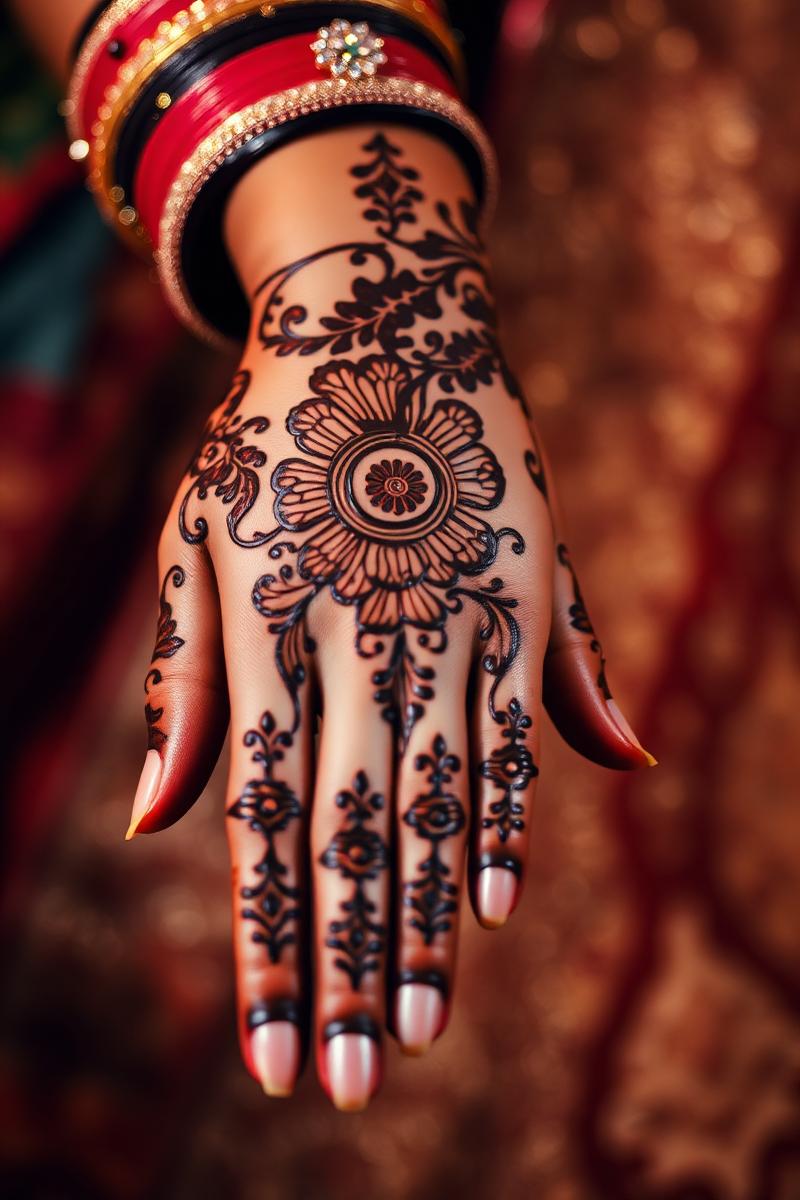
Arabic mehndi is looser: bold floral vines that trail across the hand with visible negative space, usually confined to one side. It's faster to apply — often under 90 minutes per hand — and reads better in photos taken from a distance, which is why a lot of urban brides are choosing it for the actual wedding day and saving a dense Rajasthani hand for the mehndi function itself.
Cost follows time: expect Rajasthani bridal work to run considerably higher per hand than an Arabic design of comparable size, purely because of the hours involved. Always confirm whether the quote includes both hands and feet — that's the single most common miscommunication we see.